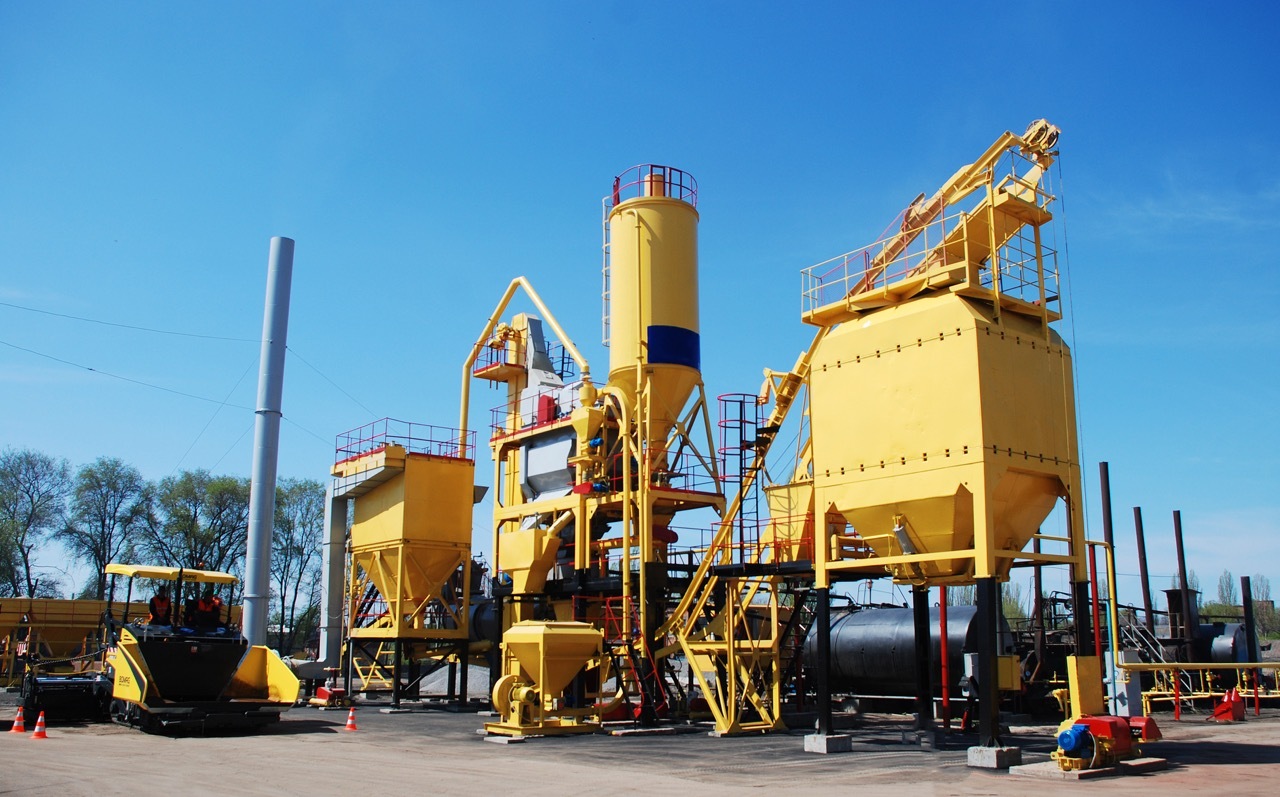
Centrifugal Fans for Asphalt & Aggregate Applications
Engineered airflow solutions for asphalt drying, combustion air, dust collection, and emissions control.
AIRPRO // INDUSTRIES
Industrial Fans for Asphalt & Aggregate Operations
Asphalt production and aggregate processing depend on reliable, precisely engineered airflow at every stage of the process. From the drum dryer burner to the baghouse and beyond, fans and blowers are critical to plant efficiency, uptime, and emissions compliance.
AirPro designs and builds industrial centrifugal fans for the demanding conditions found in asphalt plants and aggregate operations including high temperatures, dust-laden airstreams, outdoor environments, and the continuous-duty cycles that define production season.
WHY AIRPRO
36-Month Warranty
Industry-leading 3-year warranty coverage.
Built for High-Temperature Duty
Materials, clearances, coatings, & bearing protection are chosen for real drum dryer conditions.
ISO 9001:2015 Certified
Consistent, reliable manufacturing quality.
Application-Specific Engineering
Custom designs built to your exact duty point.
All-Brand Replacement Parts & Retrofits
Replacement and reverse engineering support for any asphalt plant fan, regardless of EOM.
Factory-Backed Service
Startup, commissioning, troubleshooting & emergency repair support.
Asphalt & Aggregate Processing Systems That Rely on Industrial Fans
AirPro fans and blowers serve a wide range of asphalt and aggregate facilities, including:
- Hot mix asphalt (HMA) plants — batch & drum mix
- Warm mix asphalt (WMA) production
- Reclaimed asphalt pavement (RAP) processing
- Aggregate crushing, screening, & washing facilities
- Quarry & mining operations
- Asphalt road construction & paving contractors
- Airport runway & taxiway construction
- Asphalt recycling & reclaiming operations
Finding the right solution
Asphalt Fan Types, Arrangements & Design Considerations
Common industrial fan designs used in asphalt applications:
Based on AirPro’s asphalt project history, the following fan types are most frequently specified for this industry. AirPro evaluates each application individually to select the best design for the duty point.
Backward Curved
BCHS / BCES – High-Volume Single-Width
The second most common type in AirPro’s asphalt applications. Both offer a non-overloading power curve and high efficiency (up to 83% static efficiency). These are strong choices for larger induced draft and forced draft duties handling clean air.
Backward Inclined
BIHS – High-Volume Single-Width
Used in higher-volume induced draft and forced draft positions. Flat backward inclined blades with static efficiency up to 80% and a non-overloading power curve. Best handles clean or lightly dust-laden air.
Backward Curved
BCLS – Low-Volume Single-Width
The BCLS features a narrow wheel design with backward curved blades, with static efficiency up to 80%. It handles clean or lightly dust-laden air and is well-suited for the range of forced and induced draft duties found throughout asphalt plant systems with moderate-to-high pressure and low volume.
Additional Fan Types for Specific Duties
- BCMS – Medium-Volume Single-Width
- RTMS – Medium-Volume Single-Width (for corrosive or lightly dust-laden airstreams)
- RTHS – High-Volume Single-Width (for higher-volume corrosive or dust-laden duties)
- IEPW – Paddle Wheel (for abrasive, material-filled airstreams)
- P##A, P##B, P##C, P##D – for high-static-pressure combustion air duties up to 130 in. w.g.
- BIMS — Medium-Volume Single-Width
- BILS — Low-Volume Single-Width
Fan selection considerations for asphalt operations:
Fan selection for asphalt and aggregate applications involves a combination of thermal, mechanical, and process-specific factors. Key considerations include:
- Temperature –
High-temperature construction is standard in most asphalt plant positions, from induced draft through drum dryer service - Pressure –
Typically 10–30 inches w.g. for most asphalt plant duties - Airflow Volume –
Varies significantly by plant capacity and drum configuration - Particulate Loading –
Aggregate fines and dust require appropriate wheel geometry in some applications - Seasonal and Continuous Duty –
Extended daily production hours during paving season demand robust, reliable construction - Turndown and Speed Control –
VFDs for smooth startup and efficient operation across varying output rates - Drive Type –
Belt drive is the most common configuration in asphalt applications; often two motors and belt drives are connected to the fan shaft to save on overall footprint; direct drive is used in select applications - Emissions Compliance –
EPA and state regulations for particulate matter and VOCs
Fan arrangements commonly used in asphalt applications:
Fan arrangements define how the fan and motor are mounted and driven. Common arrangements for asphalt and aggregate operations include:
Arrangement 9D
(most common)
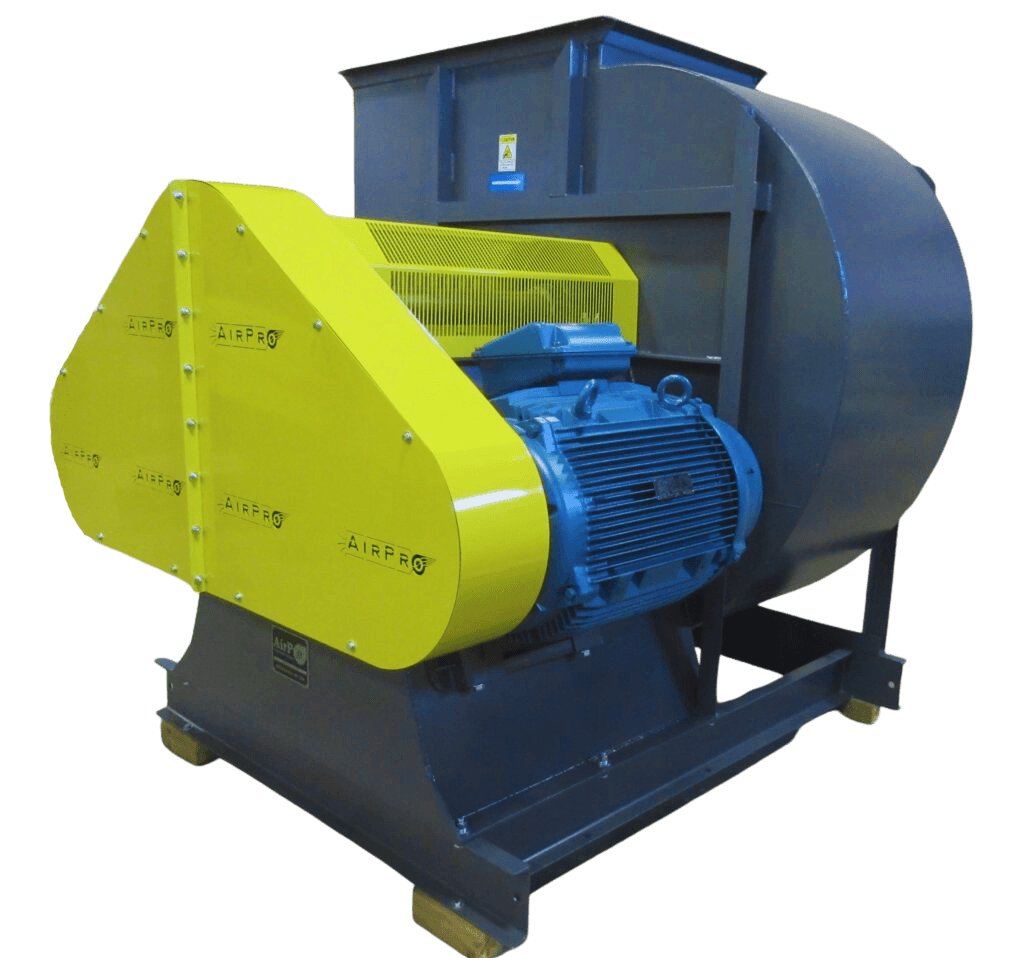
The standard configuration for asphalt plant fans in compact trailer designs — belt-driven, with two motors on either side of the pedestal.
Arrangement 4
Fan wheel mounts directly on the motor shaft. Used in select direct-drive positions where space and cost favor a simpler assembly.
Arrangement 8
Motor shaft is in line with the fan shaft and connects with a coupling. Two overhung bearings support the fan shaft and wheel.
Arrangement 1
Belt driven arrangement where tight space is not as big a concern. Fan and motor mount to a unitary base separately, and a belt drive connects the motor shaft to the fan shaft and operates at the correct speed by sizing the sheaves appropriately.
Fan design & accessory considerations for asphalt operations:
Asphalt fan systems must account for abrasive particulate, elevated temperatures, and buildup from sticky process contaminants. Improper fan selection can lead to premature wear, airflow instability, excessive vibration, reduced efficiency, and unplanned downtime. Application-specific engineering helps ensure the fan, accessories, and controls are matched to both the process and the operating environment.
Materials of Construction
High-temperature carbon steel (HTCS) is the most common wheel material for asphalt plant service. Carbon steel (CS) is standard for airstream-contact components. Stainless steel and specialty alloys are available where corrosive conditions require them.
Industrial fans for asphalt applications often have several or all the following items included:
High-Temperature Components
- High-Temperature Construction – HTCS wheel, thermally compensated clearances, and bearing protection
- High-Temperature Coating – finish systems rated for elevated operating temperatures
- Extended Lube Lines – for accessible bearing lubrication in high-temp or confined installations
- Custom / Purge Shaft Seals – to separate hot gas from external ambient conditions in drum dryer positions
Environmental
- Weather Hoods – to protect fan inlets/outlets from rain, snow, and debris in outdoor installations
- Flex Connectors / Expansion Joints – to accommodate thermal expansion and duct movement
- Inlet Box – for installations with limited ductwork space on the inlet side
- Inlet Silencers – to meet site noise requirements
Airflow Control & Efficiency
- Variable Frequency Drives (VFDs) – for speed control, efficient turndown, and smooth startup
- Dampers (VIV, outlet opposed-blade) – for airflow control and system balancing
- Actuators and Positioners – for automated, repeatable airflow adjustment
Maintenance & Serviceability
- Split Housing – for wheel access and maintenance without separating inlet or outlet ductwork
- Vibration and Temperature Sensors – for bearing health monitoring and unplanned outage prevention
Drive & Base
- Belt Drive Package – sheaves, belts, and tensioning hardware
- Unitary Base – common base for fan, motor, and drive components
WHY AIRPRO
Industry-Leading Blowers & Fans for Asphalt Applications
Built for Heat, Dust, & Wear
Asphalt plant fans operate in tough conditions that can include elevated temperatures, abrasive aggregate dust, and sticky hydrocarbon fumes. AirPro engineers fans with the materials, wheel designs, and protective options needed to improve reliability and extend service life.
Asphalt-Specific Engineering
Each asphalt application has different airflow and pressure demands. Combustion air, dryer exhaust, baghouse ID, and blue smoke collection all require different fan characteristics. AirPro evaluates the full operating environment to match the fan to the system, not force the system to fit a standard catalog unit.
Retrofit-Ready Solutions
Many asphalt plants operate with legacy equipment, tight layouts, and aging fan systems. AirPro supports replacement fan projects, upgrades, and reverse-engineered solutions to improve performance without requiring a full plant redesign.
Industrial Fan Applications Supporting Asphalt Plants
AirPro engineers fans for the full range of airflow duties across an asphalt plant:
Drum Dryer Combustion Air
The drum dryer burner requires a steady, high-volume supply of combustion air to dry and heat aggregate. These fans handle clean air and deliver stable performance across varying fuel types and output rates.
Drum Dryer Induced Draft
Induced draft fans pull exhaust gases and moisture through the drum following aggregate drying. They are built for high temperatures, light dust-laden conditions, and the thermal and mechanical demands of continuous operation.
Baghouse / Dust Collector Fans
After exhaust gases pass through the baghouse or similar equipment, this fan draws the cleaned airstream through the system and exhausts it. These fans typically handle high airflow volumes and must be carefully matched to the baghouse pressure drop and system design.
Aggregate & Material Handling
Some aggregate operations use pneumatic conveying or collection systems to move fine materials. Our radial and paddle wheel designs handle abrasive, dust-laden airstreams where conventional centrifugal fans would build up with materials and/or erode quickly.
Fume & Vapor Handling
Asphalt operations generate fumes and vapors that require controlled extraction. Fan construction and materials must be matched to the chemical and thermal conditions of the airstream.
FEATURED FAN
Custom Heavy-Duty Asphalt Plant Fan for OEM
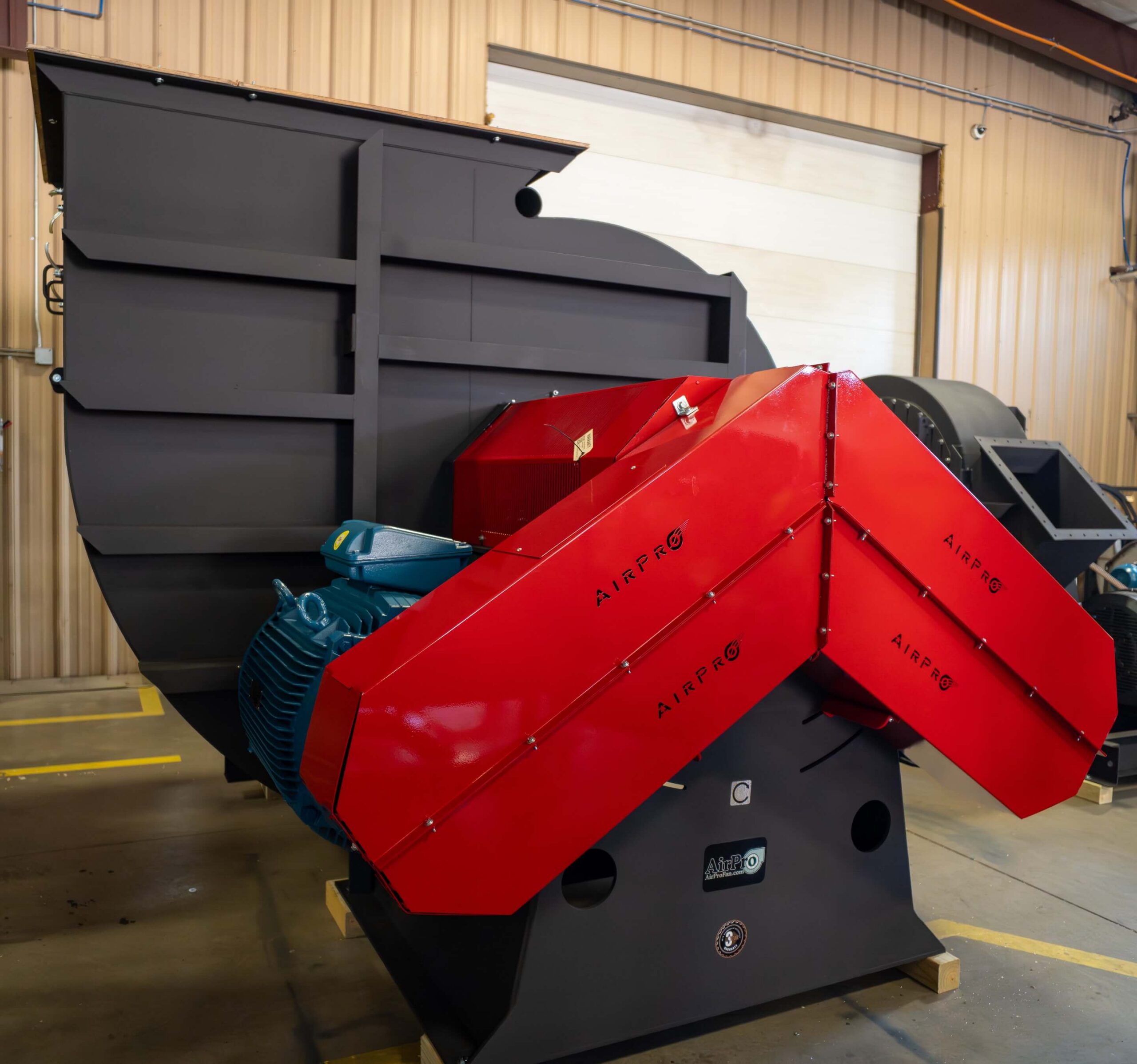
AirPro engineered and delivered a heavy-duty backward-curved centrifugal fan for an asphalt plant equipment OEM, designed to match an existing installation footprint. Built to the OEM’s installation drawing, the fan integrated directly with surrounding equipment and minimized field modifications during installation.
- Product Type: BCES (backward-curved, high-efficiency, single width)
- Description: Class X; Size 600; Arr. 9D; 60″ diameter wheel; 500°F max design temp
- Features: Engineered to match existing installation footprint; dual-drive V-belt package; two 150 HP motors for 300 HP combined; one motor with F2 conduit box; carbon steel airstream construction; high-temperature carbon steel wheel; heavy-duty pedestal; hinged access door; companion outlet flange; slip inlet; industrial enamel exterior coating.
High-Quality Support for Aggregate Fans & Blowers


Connect with an Asphalt & Aggregate Fan Application Expert
Our experienced application engineers are ready to help you find the right fan. Whether you’re replacing an existing unit or designing a new system, we’ll make sure you get a solution that fits your specs, timeline, and budget.
Call, email, or submit your info to get started and our team will respond quickly.